5 years
Hawaii: unclaimed bank money and where to complain
A Hawaii checking or savings account that sits untouched for five years is presumed abandoned, and the state's Unclaimed Property Program holds it for you at no charge. Here is how to look, and who to ask if a bank wrongs you.
By HonestRudder Editorial Team Updated 4 min read
- Dormancy for deposits
- 5 years
- Who holds the money
- Budget and Finance Dept.
- State banks and credit unions
- DCCA, Fin. Institutions
In short
In Hawaii, a demand, savings or time deposit is presumed abandoned five years after it matures or after the owner's last indication of interest, whichever is earlier. The money goes to the Unclaimed Property Program in the Department of Budget and Finance, and it stays claimable: search at unclaimedproperty.ehawaii.gov. Complaints about a state-chartered bank or credit union go to the Division of Financial Institutions in the Department of Commerce and Consumer Affairs (DCCA). Federally chartered institutions answer to federal regulators instead.
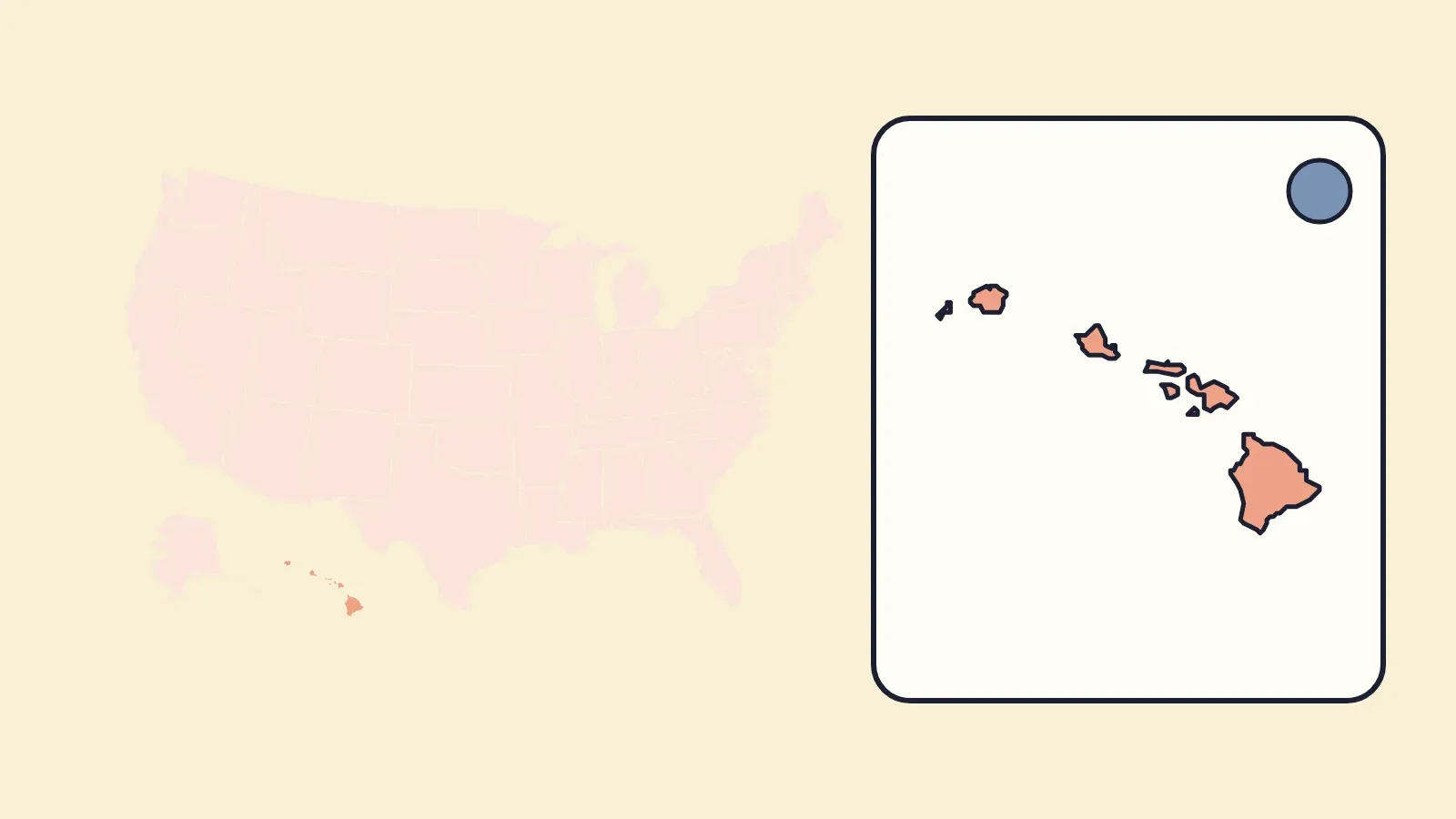
Hawaii at a glance
How money from a dormant account reaches the state
Hawaii's unclaimed property law is Chapter 523A of the Hawaii Revised Statutes. Section 523A-3 lists how long each kind of property must sit before it is presumed abandoned. For a demand, savings or time deposit, the period is five years after the earlier of maturity or the owner's last indication of interest. A checking account is a demand deposit. A deposit that renews automatically is treated as matured on its first maturity date, unless you consented to the renewal in writing or in a record the bank keeps. The National Association of State Treasurers' reporting page for Hawaii lists five years for checking and savings, but seven years for certificates of deposit. That differs from the statute text for time deposits, so ask the program if you hold an old CD.
Section 523A-3 says activity that shows interest includes an owner-directed change to the account, a deposit into or withdrawal from the account, cashing a dividend check and paying an insurance premium. Written contact with the bank, or a record the bank made of contact with you, also counts.
Finding and claiming your money
- Search by name. Go to unclaimedproperty.ehawaii.gov and search each name you have used, including a maiden name and any business name. Try former addresses too.
- Try MissingMoney.com too. The NAUPA tool searches several states at once, but the state's own site is the primary source.
- Call for next steps. The Unclaimed Property Program's page says to phone 808-586-1589 if you find property. It lists no fee: the program says it returns property to owners at no charge.
- Keep your documents ready. Have identification on hand. If the property belonged to someone else, be ready to show how you are linked to it.
If you are looking for money that belonged to a relative who has died, ask the program what proof it requires before you send anything.
Who handles bank and credit union complaints
The Division of Financial Institutions (DFI), part of the Department of Commerce and Consumer Affairs, handles complaints about the institutions it charters or licenses. Its complaint page lists state-chartered banks, savings and loan associations and credit unions. Submit the complaint in writing: DFI prefers its complaint form but does not require it. Mail it to P.O. Box 2054, Honolulu, HI 96805, or deliver it to 335 Merchant Street, Room 221, Honolulu. If the complaint is within DFI's authority, it forwards the complaint to the institution, which usually has 15 days to respond. DFI says it cannot sue or seek money for individuals or arbitrate private disputes, and that a lawyer may be the right call for some problems. A national bank answers to the Office of the Comptroller of the Currency, and a federal credit union to the National Credit Union Administration.
Hawaii's consumer protection office is not in the Attorney General's office. The Office of Consumer Protection is a division of DCCA and serves as the State's consumer counsel under Chapter 487 of the Hawaii Revised Statutes. Call the DCCA Consumer Resource Center at 1-844-808-3222 or use its online complaint form. The office reviews and prosecutes unfair or deceptive trade practices, so do not rely on it to recover money; use the bank's regulator, the CFPB, or your own lawyer. For the federal route, see how to file a complaint with the CFPB and your state.
State-chartered bank or credit union
DCCA Division of Financial Institutions. Written complaint, copies only.
Federal charter
National bank, OCC. Federal credit union, NCUA.
Business, practice or scam
Office of Consumer Protection, 1-844-808-3222.
What this means in practice
- Make one deposit, withdrawal or written contact on every account each year, so the five-year clock never runs out.
- Update your address with every bank. A bank that cannot reach you may report the account.
- A fee that drains a dormant account to zero is a reason to close the account properly. See closing a bank account.
- To check whether a deposit is insured at a bank, see FDIC and NCUA deposit insurance.
Common questions
How long before a Hawaii bank account counts as abandoned?
Five years after the earlier of maturity or the owner's last indication of interest, for a demand, savings or time deposit, under HRS § 523A-3(a)(5).
Where do I search for money Hawaii is holding?
unclaimedproperty.ehawaii.gov, run by the Unclaimed Property Program in the Department of Budget and Finance. The program's phone line is 808-586-1589.
Who do I complain to about a Hawaii credit union?
If it is state-chartered, the Division of Financial Institutions in DCCA. If it is a federal credit union, the National Credit Union Administration.
Sources
- NAUPA (National Association of State Treasurers), Hawaii dormancy periods and contacts
- Hawaii Revised Statutes, Section 523A-3, Presumptions of abandonment
- Hawaii Department of Budget and Finance, Unclaimed Property Program
- Hawaii DCCA, Division of Financial Institutions
- Hawaii DCCA, Division of Financial Institutions, Consumer complaint FAQs
- Hawaii DCCA, Office of Consumer Protection
Facts on this page were checked against these sources on November 21, 2026. NAUPA's page and the statute text differ on certificates of deposit; the statute governs. Phone numbers and complaint procedures change; use the agency's own page before you send anything.
Related reading
-

Account guide
Closing a bank account
How to close an account cleanly: new account first, direct deposits moved, autopays stopped and pending items cleared.
-

Rights guide
How to file a complaint
Which agency takes a bank or credit union complaint, how the CFPB process works and what to expect.
-

Account guide
FDIC and NCUA deposit insurance
What the $250,000 limit covers, how ownership categories add up and how to check that an institution is insured.