3 years
New Jersey: unclaimed bank money and where to complain
A New Jersey checking or savings account that sits untouched for three years is presumed abandoned and goes to the state Treasury. Here is how to look, and who to contact if a bank or credit union wrongs you.
By HonestRudder Editorial Team Updated 4 min read
- Dormancy for deposits
- 3 years
- Who holds the money
- The state Treasury
- State banks and credit unions
- State banking regulator
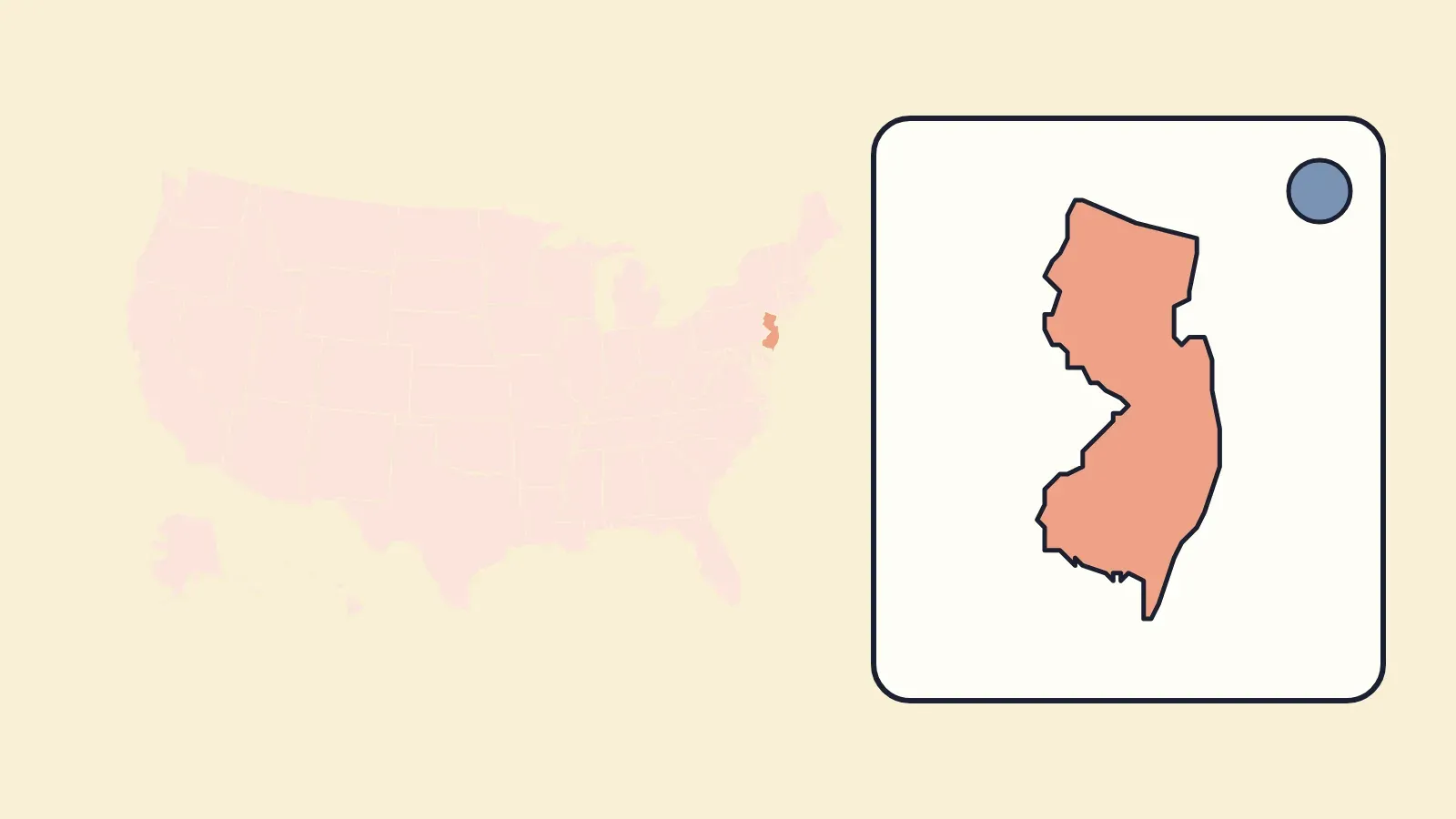
In short
In New Jersey, a demand, savings or time deposit with no owner activity for three years is presumed abandoned and reported to the state. The money stays claimable: the Unclaimed Property Administration says it never charges a fee to search and claim. Complaints about a state-chartered bank or credit union go to the Department of Banking and Insurance. Federally chartered institutions answer to federal regulators instead.
New Jersey at a glance
How money from a dormant account reaches the state
New Jersey's unclaimed property law is Title 46, chapter 30B of the state statutes. Section 46:30B-18 presumes a demand, savings or time deposit at a financial organization abandoned three years after the earlier of two dates: the deposit's maturity, or your last indication of interest in it. A checking account is a demand deposit, so the three-year period covers it. The state Treasury's abandonment table lists the same three years for savings, time and demand deposits, and the National Association of State Treasurers' reporting page for New Jersey lists three years for checking, savings and certificates of deposit.
The statute says what restarts the period. Within the three years, any of these counts: a deposit or withdrawal that changes the amount, or presenting a passbook so interest can be credited; a written message from you to the institution about the account; or a record, made by an employee of the institution, that shows your interest in it. Other property or another relationship with the same institution can count too, when the institution writes to you about the account at the address it uses for that other property or relationship.
Finding and claiming your money
- Search by name. Use the search page at unclaimedfunds.nj.gov. Try each name you have used, including a maiden name and any business name.
- Start the claim. The same site covers the claim process, uploading documents and checking claim status. Expect to prove who you are, and your link to the property if it belonged to someone else.
- Ask for help. The Unclaimed Property Administration lists 609-292-9200, and a mailing address of PO Box 214, 50 West State Street, 6th Floor, Trenton, NJ 08625.
- Do not pay to claim your own money. The Administration says it never charges a fee to search and claim your unclaimed property. Anyone who asks for a fee up front to do the same is a warning sign.
The property you find may include forgotten bank accounts, uncashed checks and other balances. You can also check the nationwide MissingMoney.com tool run by the state treasurers' association, which covers many states at once.
Who handles bank and credit union complaints
Which office hears a complaint depends on who chartered the institution. The Department of Banking and Insurance, which lists a Consumer Hotline of 1-800-446-7467 on weekdays from 8:30 am to 5:00 pm, takes online complaints, or a written one by mail to the Consumer Response Center, P.O. Box 471, Trenton, NJ 08625-0471, with copies of your documents. Its Division of Banking says it has no jurisdiction over federally chartered banks, so a national bank or federal savings institution answers to the Office of the Comptroller of the Currency, and a federal credit union to the National Credit Union Administration. The Department advises filing with the agency that regulates the company you are complaining about.
For a complaint about a business or a practice more broadly, the Division of Consumer Affairs runs a complaint process on its website. Its page warns against putting sensitive personal information on its forms. Do not rely on it to recover money from a bank; use the bank's regulator, the CFPB, or your own lawyer. For the federal route, see how to file a complaint with the CFPB and your state.
State-chartered bank or credit union
Department of Banking and Insurance, consumer hotline 1-800-446-7467.
National bank or federal savings institution
Office of the Comptroller of the Currency.
Federal credit union
National Credit Union Administration.
What this means in practice
- Make one deposit, withdrawal or written message to each account at least once every three years. Under N.J.S.A. 46:30B-18, any of those restarts the period.
- Tell every institution when you move. A letter that comes back is one way a dormant account goes unnoticed.
- A fee that drains a dormant account to zero is a reason to close the account properly. See closing a bank account.
- To check whether a deposit is insured at a bank, see FDIC and NCUA deposit insurance.
Common questions
How long before a New Jersey bank account counts as abandoned?
Three years without owner activity for a demand, savings or time deposit, under N.J.S.A. 46:30B-18.
Where do I search for money New Jersey is holding?
The Unclaimed Property Administration's search page at unclaimedfunds.nj.gov. The office lists 609-292-9200.
Does New Jersey charge to claim unclaimed property?
The Unclaimed Property Administration says it never charges a fee to search and claim your unclaimed property.
Sources
- New Jersey Department of the Treasury, Unclaimed Property
- NAUPA (National Association of State Treasurers), New Jersey dormancy periods
- New Jersey Revised Statutes, 46:30B-18 (presumption of abandonment)
- New Jersey Treasury, Abandonment table (updated September 2025)
- New Jersey Department of Banking and Insurance, Consumer complaints
- New Jersey Division of Consumer Affairs, Consumer complaints
Facts on this page were checked against these sources on November 21, 2026. Phone numbers and complaint procedures change; use the agency's own page before you send anything.
Related reading
-
Account guide
Closing a bank account
How to close an account cleanly: new account first, direct deposits moved, autopays stopped and pending items cleared.
-

Rights guide
How to file a complaint
Which agency takes a bank or credit union complaint, how the CFPB process works and what to expect.
-
Account guide
FDIC and NCUA deposit insurance
What the $250,000 limit covers, how ownership categories add up and how to check that an institution is insured.