3 years
South Dakota: unclaimed bank money and where to complain
A South Dakota checking or savings account with no owner activity for three years can be reported to the State Treasurer, who holds the money for you. Here is how to look, and who takes complaints about banks.
By HonestRudder Editorial Team Updated 4 min read
- Dormancy for checking and savings
- 3 years
- Who holds the money
- The State Treasurer
- State banks
- Division of Banking
In short
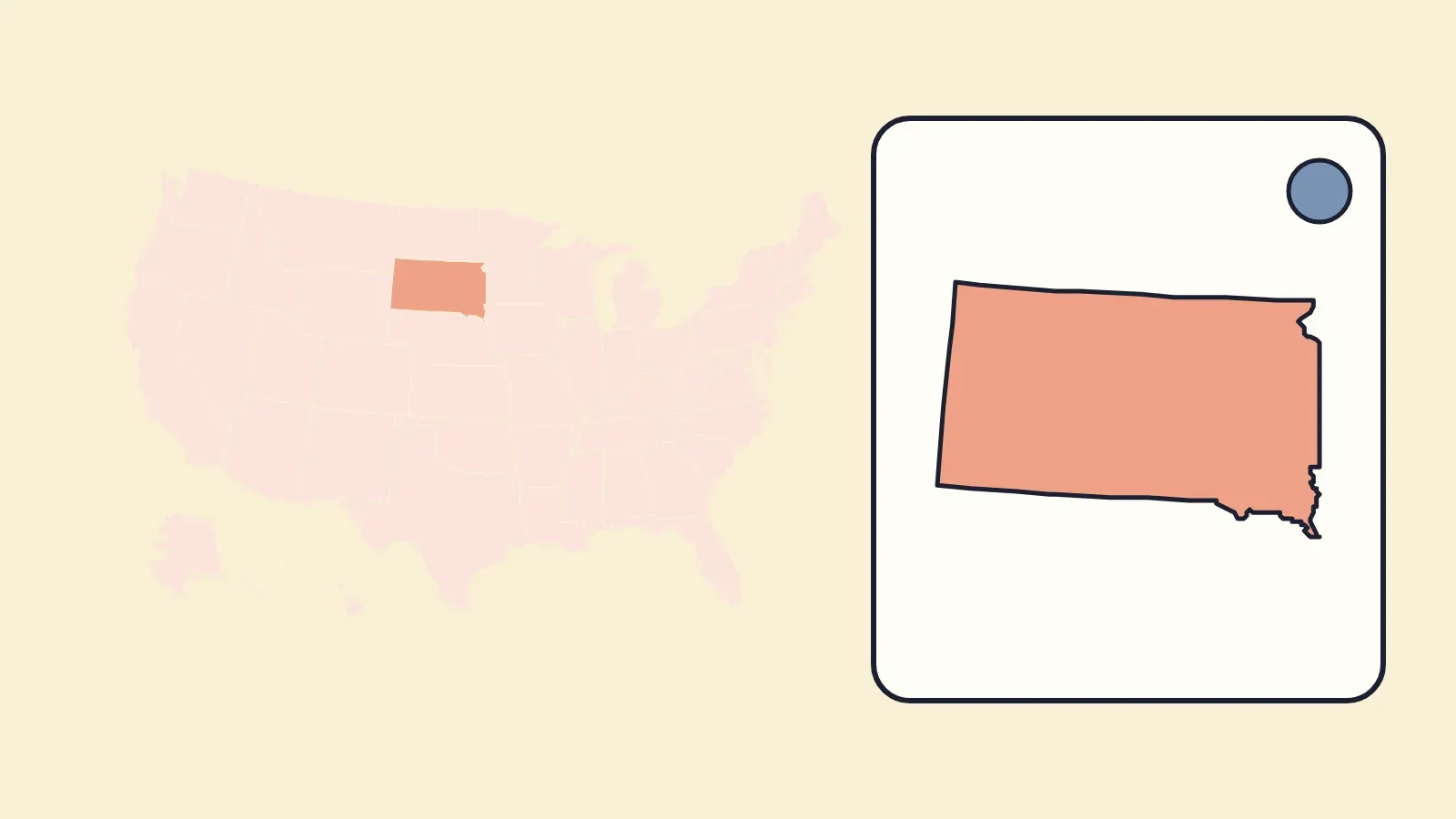
In South Dakota, a demand or savings deposit, or a matured time deposit, with no owner activity for three years is presumed abandoned under SDCL 43-41B-6. The money goes to the State Treasurer, and the Treasurer's page says claims can be made at no cost with proper identification. Complaints about a state-chartered bank go to the Division of Banking. The Division says it does not regulate credit unions.
South Dakota at a glance
How a dormant account becomes unclaimed property
South Dakota's Uniform Unclaimed Property Act covers bank deposits in SDCL 43-41B-6. A demand deposit, a savings deposit or a matured time deposit, including one that renews on its own, is presumed abandoned after three years. The National Association of State Treasurers (NAUPA) lists three years for checking, savings and certificates of deposit in South Dakota too.
The statute lists what keeps an account from being presumed abandoned. You change the deposit amount or present the passbook. You write to the bank about the account. Or an employee's memo or record on file shows your interest. Another account or relationship with the same bank can count, as can receiving tax reports or regular statements by mail; receipt is presumed if the bank sent the statement first class and it was not returned. The statute also mentions a certified letter with a return receipt signed by the addressee, sent at least once in the period. Read subsection (a) of the section for the exact conditions.
The section's history notes list three session laws, the most recent from 2012, so this rule does not appear to have changed in the last five years.
Finding and claiming your money
- Search by name. The Treasurer's unclaimed property page has a "Find out now" button that leads to southdakota.findyourunclaimedproperty.com. Search each name you have used, including a maiden name and any business name.
- File a claim. If you find a match, follow the site's instructions. The Treasurer's page says property can be claimed at no cost with the proper identification.
- Call or visit by appointment. The Unclaimed Property line is 605-773-3379. The Treasurer's page says walk-ins at 124 E Dakota Ave in Pierre are by appointment only.
- Do not pay to claim. Since the state says claims cost nothing, a company that asks you for a fee up front to claim your own property is worth questioning before you pay.
Property in the database can also belong to a business or to a relative who has died. Expect to show your link to it before the state pays.
Who handles bank and credit union complaints
The South Dakota Division of Banking says it regulates and supervises state-chartered and licensed financial institutions. Its consumer page says complaints against those institutions are filed online. The same page lists credit unions under "Who We Do Not Regulate" and links to National Credit Union Administration consumer resources, and these pages do not say which agency supervises a state-chartered credit union. Start with the NCUA's consumer pages, or ask the credit union which regulator oversees it. The Division's phone number is 605-773-3421. A national bank answers to the Office of the Comptroller of the Currency.
The Attorney General's Division of Consumer Protection takes complaints about businesses through an online form. Its phone numbers are 605-773-4400 and, in state, 800-300-1986. Its contact page asks for your full name, address and phone number so the office can process an inquiry; it does not say whether the office mediates individual complaints. For the federal route, see how to file a complaint with the CFPB and your state.
State-chartered bank
Division of Banking, 605-773-3421. Complaints are filed online.
Credit union
Not regulated by the Division of Banking. Start with the NCUA's consumer pages.
Business, practice or scam
Attorney General, Division of Consumer Protection, 605-773-4400.
What this means in practice
- Make one deposit, withdrawal or written message on each account at least once every three years.
- Update your address with every bank, so it can reach you before it has to report the account.
- If a fee has drained a dormant account to zero, read the fee schedule and think about closing the account. See closing a bank account.
- To check whether a deposit is insured at a bank or credit union, see FDIC and NCUA deposit insurance.
Common questions
How long before a South Dakota bank account counts as abandoned?
Three years without owner activity for a demand or savings deposit or a matured time deposit, under SDCL 43-41B-6.
Where do I search for money South Dakota is holding?
Through the State Treasurer's unclaimed property page, which links to southdakota.findyourunclaimedproperty.com. The Unclaimed Property line is 605-773-3379.
Does the Division of Banking take complaints about credit unions?
Its consumer page lists credit unions under institutions it does not regulate and links to NCUA resources. Ask the credit union or the NCUA which regulator oversees it.
Sources
- South Dakota State Treasurer, Unclaimed Property
- NAUPA (National Association of State Treasurers), South Dakota dormancy periods
- South Dakota Codified Laws 43-41B-6, bank deposits and funds in financial organizations
- South Dakota Division of Banking, Consumer complaints and resources
- South Dakota Attorney General, Division of Consumer Protection, Contact
Facts on this page were checked against these sources on November 21, 2026. The Division of Banking's pages did not say which agency supervises state-chartered credit unions, so confirm that with the credit union or the NCUA.
Related reading
-
Account guide
Closing a bank account
How to close an account cleanly: new account first, direct deposits moved, autopays stopped and pending items cleared.
-

Rights guide
How to file a complaint
Which agency takes a bank or credit union complaint, how the CFPB process works and what to expect.
-
Account guide
FDIC and NCUA deposit insurance
What the $250,000 limit covers, how ownership categories add up and how to check that an institution is insured.